
What does it mean to create a safe and inclusive space for everyone? And how do we make sure that everyone feels seen, accepted, and welcome, regardless of their background or circumstances?
Through two youth exchanges organised within the LADDER project, Monta shares her personal experiences and reflections on working with highly vulnerable young people, navigating different needs and challenges, and learning what it takes to create a space where everyone belongs – including the adults who make it possible:
“I was lucky enough to be present at two youth exchanges of the LADDER project. In one, I was in the role of facilitator, and in the other, in the role of a mentor for the facilitators and group leaders.
These were very special mobilities, as they were designed specifically for highly vulnerable young people from very different backgrounds. In my mind, I perceive every young person as vulnerable, because we actually all are. But in these specific cases, these youngsters faced several factors that affected their accessibility to these experiences — starting from language barriers, geographical barriers, emotional distress, travel documents and residential status, etc.
They were not to be put into boxes. Each of their stories was unique, and all of them had something else to bring to the table- either some incredibly wise thoughts and reflections, an amazing sense of humour, artistic talent, or a bright soul and smile.
Both of these experiences brought together very different people and united them beyond languages.
For me, as an educator, an adult, and a safeguarding person in this context, it was really unique and challenging to try and accommodate all of the needs. Starting from the fact that even in a “regular” youth exchange, we get exposed to very different cultural aspects – from religion and eating habits to boundaries, etc.; in these mobilities, there was sometimes the added difficulty of noticing them all as a team without specific prior explanation, being flexible, and being ready to react to any sign that something might not work.
And actually, this is what I believe safeguarding is:
it’s impossible to prepare ourselves for every scenario, but being able to see and notice each other is where the true value lies.
But sometimes, safeguarding is not only about managing the young people. It is also about managing ourselves and the other adults in the room.
During these mobilities, I got to experience a wonderful co-creation process, but it didn’t come easily. And that challenged both my own ego and the egos of other adults. It made us question how our own pride, our well-earned expertise, and the knowledge we have accumulated over the years can sometimes become obstacles to being truly inclusive.
Sometimes, it felt like a clash of great waves- each one powerful and wonderful in its own identity, but potentially destructive if not navigated carefully.
And sometimes, even the beauty of being around these smiling young people, each carrying their own universe within them, can be overwhelming. Their energy, their needs, their emotions, their unpredictability can be demanding, even when we care deeply about creating a safe and inclusive space for them.
This made me think deeply about how we stay connected to ourselves and to the values we speak about when things get difficult. How do we recognise our own limits, pace ourselves, and allow ourselves to be human, without burning out completely?
I think part of the answer lies in setting clear boundaries while remaining flexible enough to respond to reality as it unfolds. It means recognising that inclusion does not require us to abandon ourselves, just as safeguarding does not require us to have all the answers. We need to stay grounded in our values, acknowledge our emotions, and remain open to learning, even when our own assumptions, expertise, or ways of doing things are challenged.
For me, these mobilities became an opportunity for diverse and profound personal development. They laid out different aspects of myself, almost piece by piece: me as a facilitator, me as a colleague, me as an ego, me as a friend, me as a safe adult, and also me as a vulnerable human being myself.
Perhaps this is another important part of creating safe spaces: recognising that the adults who hold space for others need space, too. We need room to reflect, to make mistakes, to question ourselves, and to grow. We need to be able to support one another, rather than expecting everyone to navigate every difficult moment perfectly.
The world is facing many difficulties and turbulences at the moment. It’s very easy to put each other in a “box” based on some details we know and not give it a lot of further thought. But in order to make truly safe and inclusive spaces, society needs to start looking beyond nationalities, stereotypes, beliefs, sexuality or gender identity, and any other practices, and try to look at the person beneath with all the fears, love and strengths. The unique universe that each of us is.
That’s why I believe the LADDER project has been an incredible initiative that literally changed some of these youngsters’ lives. They expressed that the sense of being seen, belonging, and camaraderie was that of a family.
And perhaps this is what acceptance really means:
not simply tolerating someone’s differences, but being genuinely curious about who they are, making space for their story, and allowing them to exist without having to fit into a category first.
Acceptance does not mean that we need to understand everything about each other. Sometimes, it simply means being willing to listen, to notice, and to make room for someone else to be exactly who they are.
And that’s priceless.
And I want to leave you with some questions for thought:
What could be your next step in accepting more?
How can you create space for someone else’s universe without losing touch with your own?
And when you find yourself in that position that you are ready to give up – what would help you stay connected to the values that brought you here in the first place?
If these reflections resonate with you, I invite you to explore the resources developed through the LADDER project, offering practical tools, insights, and inspiration for creating safer, more inclusive, and meaningful experiences for all young people.”
Monta Melne-Meijere
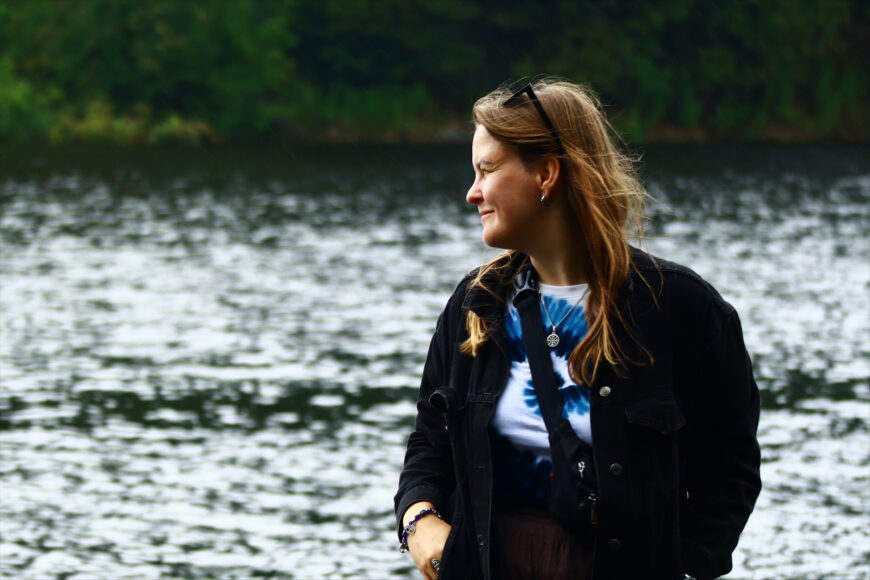
The photo features Monta, the author of the blog, and was taken by Ward Obeid.
The LADDER project is co-funded by the European Union.
The project is coordinated by Élményakadémia Public Benefit Association.
Our strategic partners are: Associazione Joint, MARTA, and Las Niñas del Tul.
Would you like to learn more about creating safe spaces?
Follow us on Facebook and Instagram.